Killaloe Bypass
A landmark achievement, connecting two towns and two counties

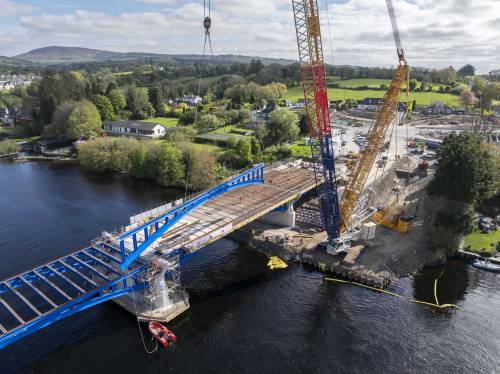
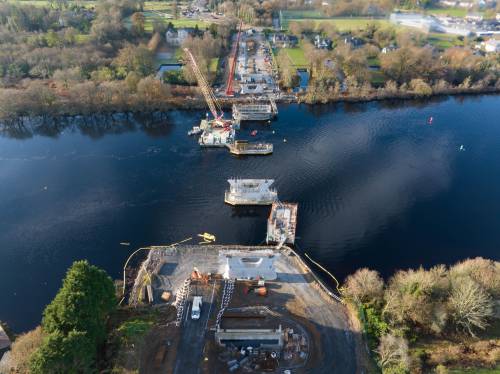
In 2025, we completed the Killaloe Bypass, Shannon Bridge Crossing and R494 Improvement Scheme which marked a significant milestone in enhancing transportation infrastructure in Clare and Tipperary
| Client | Clare County Council and Tipperary County Council |
|---|---|
| Duration | 2.5 years |
| Size/Area | 207 metres |
| Value | €88m |
| Engineering | RPS |

Please accept cookies to view this content.
Accept cookiesThe Killaloe Bypass, Shannon Bridge crossing, and R494 improvement scheme, stand as landmark achievements in Irish civil engineering, delivered by Sisk, for Clare County Council and Tipperary County Council. This transformative €88m infrastructure project includes Ireland’s first new vehicular bridge across the Shannon in more than 30 years – the Brian Ború bridge.

More than 800,000-man hours were worked on the project with an industry-leading safety record, underpinned by robust safety management, emergency drills, and close collaboration with the Irish Coast Guard. The project was delivered ahead of schedule, with the Killaloe bypass section completed in December 2024, full completion achieved in March 2025, and the official opening taking place in May 2025.
Environmental protection was a key focus, with collaboration with Inland Fisheries Ireland to safeguard aquatic habitats. Some protective measures onboarded were:
- Species translocations
- Invasive species management
- Continuous water monitoring
- Scheduling construction outside fish spawning periods
Sustainability was at the forefront of this project, with major carbon reductions achieved due to the use of Hydro-treated vegetable oil (HVO) fuel and concrete mixes containing 50% ground granulated blast-furnace slag (GGBS). Biodegradable hydraulic oils and silt curtains were employed to protect the river environment, and a carbon-intensive piled slab was replaced with a vegetated reinforced soil slope to provide a low-carbon solution for peat management.